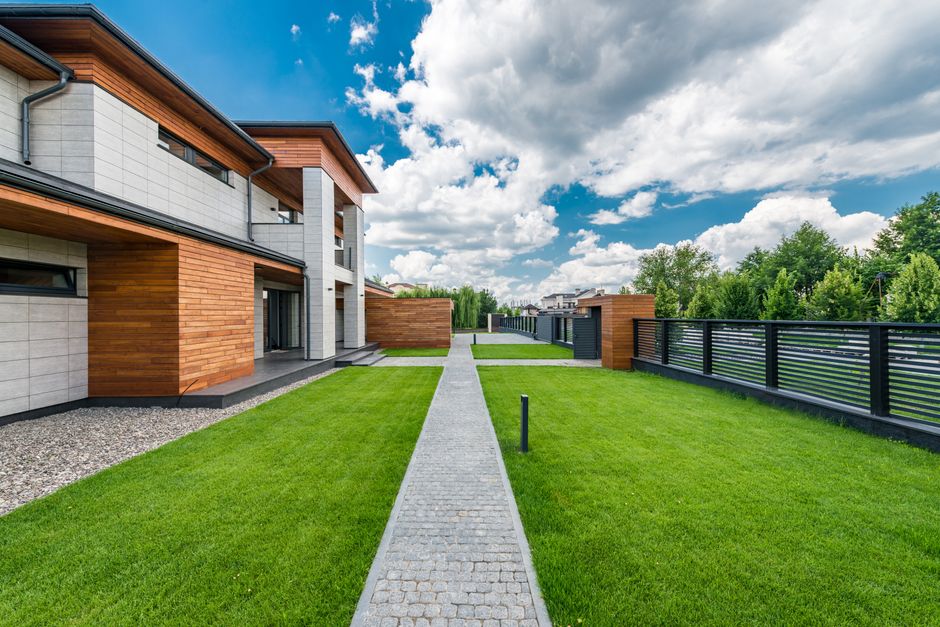
website design for general contractors
Website Design for General Contractors: A Complete Guide

Website design for general contractors is a different problem than web design in general. A GC sells five-figure and six-figure projects to strangers who are nervous about exactly one thing: choosing wrong. This guide covers what a general contractor's site needs in 2026, backed by market data, click research, and lead cost math, plus honest pricing at the end. It is long because it is complete; skim the tables if you are short on time.
The 2026 market: steady, but pickier
Harvard's Joint Center for Housing Studies puts annual homeowner improvement spending at about $518 billion by the end of 2026, with growth slowing from 2.1% mid-year toward 1.6%. Translation for a working GC: the money is still enormous, but the go-go years are paused. Homeowners are comparing more bids, taking longer to decide, and doing more research before the first phone call. In a market like this, the contractor who is easiest to find and easiest to trust wins share from the one who is merely good at the work.
Now the strange part. In the industry group where trust matters most, an estimated 45 to 56% of trades and contractor businesses have no website at all, the highest rate of any sector, while 81% of consumers research a business online before buying. Half the GCs in your market are effectively invisible to a homeowner doing homework at 9pm. That is not a threat. That is the opening.
The pages a general contractor site actually needs
A GC site does not need to be big. It needs to be structured the way homeowners think, which is by project type and by town. Here is the architecture we build, and why each page earns its place.
| Page | Its one job | What makes it work |
|---|---|---|
| Homepage | Pass the five-second test | Trade + area in the headline, real project photo, phone and quote button up top |
| Service pages, one per project type | Rank for and convert 'kitchen remodel', 'addition', 'basement finish' | Photos of that work, process, honest price ranges, FAQ |
| Project gallery, sorted by type | Proof. This is where decisions happen | Before-and-afters, a line of context per project, no stock |
| Town pages for your service area | Catch 'contractor + town' searches | Genuine local content, jobs done there, not copy-paste |
| About with license and faces | Answer 'who are these people' | License number, insurance, years, real names and photos |
| Contact / quote | Zero-friction next step | Short form, phone number, what happens after they submit |
Notice what is missing: no 'blog' requirement to start, no awards carousel, no mission statement page. Those come later or never. Six page types, done properly, outrank and outconvert the 40-page sites agencies love to sell. For what goes on that homepage specifically, see our homepage guide.
Photos: the part you cannot delegate
Every element of a GC site can be built by someone else except this one. Homeowners planning a $60,000 addition make their shortlist with their eyes, and 94% of first impressions are design-driven. Ten honest phone photos of real projects beat a hundred stock images, and stock is worse than nothing: customers detect it instantly, and it poisons the trust the rest of the site is building. The habit that pays: photograph every job at three stages, wide shots in good light, before anything and after everything. Our phone-only photo guide shows exactly how.
The quote form: three fields, not fifteen
Every field you add to a quote form costs completions. Name, contact, and a box to describe the project is enough to start every conversation you actually want. Photo upload helps for remodels and additions. And response speed is its own trust signal: on shared-lead platforms, 78% of customers go with the first responder. The same instinct applies to your own leads. An auto-reply that says 'we got it, expect a call within one business day' beats silence by more than owners expect. More in contact form best practices.
Getting found: the local search math
The map pack, the three businesses Google shows on local searches, captures roughly 44% of local-intent clicks, with the top spot alone taking 17.8%. Businesses inside it get about 93% more calls and direction requests than those ranked just below. Getting there is not mysterious: a complete Google Business Profile with the right category, a steady flow of recent reviews (97% of consumers read them, and 4.5 stars is the new filter threshold), town pages, and a fast site. The full playbook is in our local SEO for contractors guide.
Your website vs. buying leads: the 2026 numbers
Most GCs have tried the lead platforms, so here is the honest comparison using published 2026 benchmarks.
| Channel | Cost per lead | Shared? | True cost per booked job |
|---|---|---|---|
| Google Local Services Ads | ~$53 | No | ~$233 at a 43.9% book rate |
| Google Ads | ~$91 | No | $300 to $500 typical |
| Thumbtack | $25 to $75 | Yes, 4 to 5 pros | ~$250+, and 78% of wins go to the first responder |
| Angi | $15 to $100+ plus annual fee | Yes | $600 to $1,000 at 5 to 15% close rates |
| Your own site + local SEO | Retainer or one-time build | Never | Falls every month; the asset is yours |
The pattern in that table: you pay the most, per booked job, for leads that four other contractors also received. Platforms are fine as a supplement, and LSAs in particular are worth running. But every dollar spent there rents visibility, while a website with real rankings is owned. The deeper comparison is in Thumbtack and Angi vs. your own website.
What a general contractor website costs
Our pricing is published, so here it is without a sales call. A Starter site, up to 5 pages with custom mobile-first design and local SEO basics, runs $3,000+. Growth, up to 10 pages with local SEO setup and Google Business Profile work, the fit for most established GCs, runs $5,000+. Large sites run $6,500+. Every package includes forms, click-to-call, hosting setup, and launch, and the quote is fixed in writing before we start. Full details on the pricing page, or get an instant ballpark for your specific situation from the free Website Cost Calculator, no email required. The Lead Loss Calculator shows the other side of the equation: what staying invisible costs.
The mistakes that cost GCs bids
- One vague 'Services' page instead of a page per project type, so nothing ranks and nothing converts.
- Galleries with no context. A kitchen photo with a one-line story outsells ten anonymous thumbnails.
- Hiding the service area, leaving homeowners to guess whether you cover their town.
- No license or insurance mention on a site selling six-figure projects.
- A site that takes 8 seconds to load on a phone, which is where the majority of visitors are.
Where to start
If you have no site: gather 20 photos of your best work and start there; the structure above fits in a Starter build. If you have a dated site: run our 20-minute audit first, because sometimes the fix is smaller than a rebuild. And if you want a professional read on your specific situation, request a free review. We build for general contractors across Pennsylvania, our work is public, and we will tell you honestly whether you need a new site or just a better one.
Sevastian Usenko
Founder, Seva Web Studio
Sevastian founded Seva Web Studio after watching skilled contractors lose work to people who were simply easier to find online. He writes about strategy, getting found, and running an honest web studio for local trades.